Through a range of initiatives, including its Small Grants Scheme, the Near Neighbours Programme, since 2011, has been promoting cohesion, building trust, and encouraging collaboration in religiously and culturally diverse neighbourhoods across England, including here in Luton.
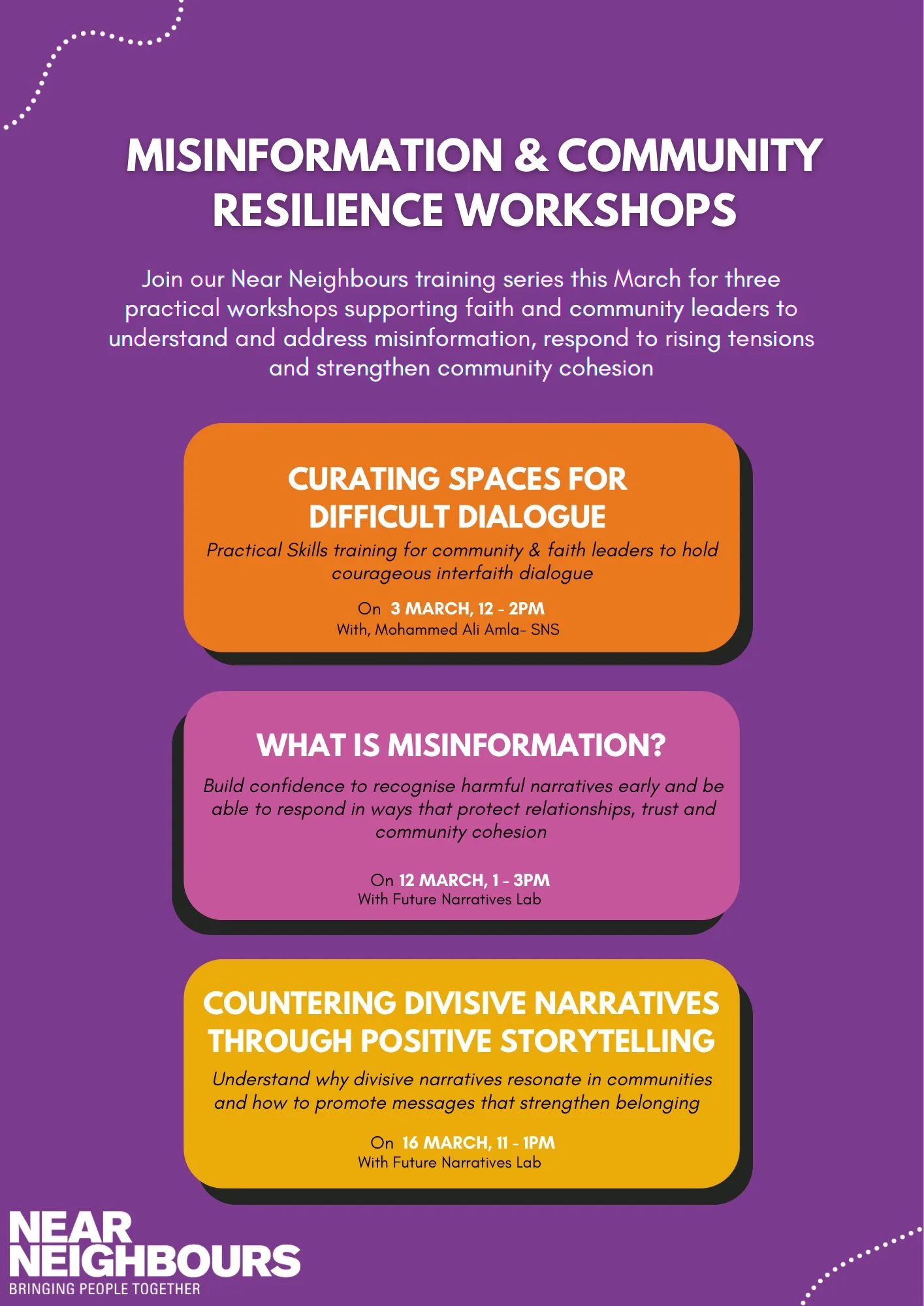
Recently, Near Neighbours delivered a series of online workshops supporting faith and community leaders to understand and address misinformation, respond to rising tensions, strengthen community resilience, cohesion and manage hate, prejudice, and discrimination.
The three workshops were titled: “Having Difficult Conversations,” “Understanding What Misinformation Is and How It Affects Communities,” and “Countering Divisive Narratives Through Positive Storytelling.”
At a time, when incitement to violent extremism fuelled by divisive, racist, and hateful narratives rooted in misinformation and disinformation is becoming the norm, these workshops were timely and necessary.
They highlighted the importance of creating safe, brave, honest spaces for respectful dialogue that help communities move beyond fear, polarisation, and heightened emotions that can sometimes overpower rational thinking. Preparation for such dialogue spaces must include understanding the local context, identifying potential triggers, agreeing ground rules for active listening, and encouraging dialogue rather than debate. This is the kind of work many of us in Luton have been committed to for years.
The workshops also explored how misinformation (false information shared without intent to deceive) and disinformation (deliberately false content designed to manipulate) spread significantly faster on social media. Even though technically some of the information may be true but it is presented in deceptive or incomplete ways to tell a false story. Participants learned about key misinformation tactics such as misrepresentation, scapegoating and fake experts, sharing misleading statistics, and fear based narratives. Case studies were shared how issues can be weaponised through conspiracy theories, coordinated online campaigns, and emotionally charged narratives. For e.g. a false and quickly deleted LinkedIn post about the suspect’s identity contributed to the escalation of the Southport riots, spreading nationwide within 48 hours. This is a chilling example of how fast misinformation can move into real-life violence, especially when mainstream media fails to challenge false claims.
The workshops concluded that fact-checking is a shared responsibility. However, to build long-term resilience, critical thinking and media/social media literacy should be embedded across the school curriculum and strengthened within the voluntary, faith, and community sectors.